


Tea
Our goal is to become your true partner in the field of tea in China. Guangzhou Inch Bio-tech Co., Ltd have laboratory and warehouses space. We are professional contract manufacturer in dietarysupplements. We offer complete scheduling transparency and achieve 99%on-time delivery rate to meet customer supply demands. Our company is committed to applying advanced manufacturing technology and strict quality control standards to every product. The price is competitive and the product is quality-assured, which is a good choice for your long-term cooperation.
-
![Organic Magic Flat Tummy Tea 2 Week Cleanse]() Organic Magic Flat Tummy Tea 2 Week CleanseRead More
Organic Magic Flat Tummy Tea 2 Week CleanseRead More✅REDUCED GAS & BLOATING✅14 DAYS DETOX FLAT TUMMY TEA✅ALL NATURAL HERBAL SUPPLEMENT✅EACH PACKAGE
-
![Skin Body Detox Herbs Tea For Cleansing]() Skin Body Detox Herbs Tea For CleansingRead More
Skin Body Detox Herbs Tea For CleansingRead More●VEGAN-FRIENDLY NON-GMO GLUTEN-FREE CAFFEINE-FREE●100% NATURAL & LEMON TASTE●DETOX & CLEANSE●5G X
-
![Natural Vegan Detox Herbal Liver Cleanse Tea]() Natural Vegan Detox Herbal Liver Cleanse TeaRead More
Natural Vegan Detox Herbal Liver Cleanse TeaRead More●VEGAN,NON-GMO,GUUTEN-FREE,SUGAR-FREE●100% NATURAL HERBAL FORMULA●GOOD TASTE WITH LEMON●BODY'S
-
![Organic Herbal Deep Sleep Aid Tea]() Organic Herbal Deep Sleep Aid TeaRead More
Organic Herbal Deep Sleep Aid TeaRead More●8 ALL-NATURAL HERBS ●30 TEA BAGS SLEEP AID TEA●100% HERBAL INGREDIENTS EFFECTIVE AND
-
![Herbal Extra Strength Sleepytime Tea For Sleep]() Herbal Extra Strength Sleepytime Tea For SleepRead More
Herbal Extra Strength Sleepytime Tea For SleepRead MoreSleep Time Herbal Tea - 30 Tea Bags100% Natural Herbal IngredientsStay asleep through the
-
![Herbal Tea For Men's Health]() Herbal Tea For Men's HealthRead More
Herbal Tea For Men's HealthRead More●5G*30 BAGS/PACK●ENHANCE ENERGY●STRENGTHEN IMMUNITY●NATURAL MEN’S MACA HERBAL TEA●100% HIGH-GRADE
-
![Man Power Maca Energy Boost Tea]() Man Power Maca Energy Boost TeaRead More
Man Power Maca Energy Boost TeaRead More●100% NATURAL MEN’S MACA HERBAL TEA●NO SIDE EFFECT MACA TEA●STRENGTHEN IMMUNITY●ENHANCE ENERGY●MACA
-
![Natural Immune Booster Tea]() Natural Immune Booster TeaRead More
Natural Immune Booster TeaRead More●EACH PACKAGE INCLUDES 30 TEA BAGS.●GENTLE & EFFECTIVE WITH A GREAT TASTE.●IMMUNE BOOSTING BLEND
-
![Herbal Tea For Immune System]() Herbal Tea For Immune SystemRead More
Herbal Tea For Immune SystemRead More●100% ORGANIC,DAIRY FREE,SOY FREE,GLUTEN FREE,NON-GMO●METABOLISM BOOST AND DETOX CLEANSE●RICH IN
-
![Herbal Tea Acne Treatment For Skin]() Herbal Tea Acne Treatment For SkinRead More
Herbal Tea Acne Treatment For SkinRead More● REDUCE ACNE● FADE ACNE SPOTS●100% HERBAL INGREDIENTS NO SIDE EFFECT● EACH PACK INCLUDES 30 TEA
-
![Face Acne Removal Herbal Tea]() Face Acne Removal Herbal TeaRead More
Face Acne Removal Herbal TeaRead More●FIGHTS AGAINST ACNE & PIMPLES●DAIRY FREE,SOY FREE,GLUTEN FREE,NON-GMO●100% NATURAL PIMPLE TEA FOR
-
![Organic Boobs Enlargement And Lifting Tea]() Organic Boobs Enlargement And Lifting TeaRead More
Organic Boobs Enlargement And Lifting TeaRead More●BOOSTING ,FIRMING ,LIFTING●PROMOTES BREAST GROWTH●100% HERBAL BREAST ENHANCEMENT TEA●EACH PACK


Why Choose Us
Our certification
Our products are strictly organized and produced in accordance with the ISO9001:2015 quality management system, and fully comply with GMP/ISO9001/HACCP/HALAL certification.
OEM/ODM service
We have many years of experience in providing private label products in OEM/ODM. We provide customized requirements for different customers.
Our production capacity
Our annual output of soft capsules is more than 2 billion tablets, hard capsules is more than 100 million tablets, tablets is more than 200 million tablets, and powders, teas, and soft candies are more than 100 tons.
Our R&D
We have a strong R&D team, providing advanced product formulation solutions to develop products that meet market demand.
Rich in protective plant compounds: All varieties of tea (black, white, green and oolong) are a rich source of protective plant compounds, called polyphenols. Regularly consuming these polyphenols May help protect the cells of the body from damage and as a result reduce the risk of chronic diseases like heart disease, diabetes and cancer.
May improve blood pressure: Tea consumption May improve how our blood vessels work and help lower blood pressure. It does this by increasing the availability of a compound called nitric oxide, which helps relax the inner muscles of our blood vessels, allowing the blood to flow more freely.
May improve cardiovascular health: Evidence suggests that regular tea consumption May reduce the risk of heart disease, thought to be largely due again to the polyphenol content. Of particular note are the catechins, found to a particularly high level in green tea, which show a positive effect on all cardiovascular outcomes.
May modulate glycaemic response: Tea polyphenols help manage our body’s response to carbohydrates by inhibiting digestion and absorption, and stimulating insulin release. Green tea appears to be the most effective in this regard.
May reduce diabetes risk:
The ability of tea polyphenols to inhibit digestive enzymes like lactase and delay the uptake of glucose (sugar) in the gut has LED some studies to conclude that a consistent intake (over a lifetime) of dietary polyphenols May be as effective as some medication in reducing the risk of diabetes.
May improve gut health:
Many of the polyphenols in the diet, including those from tea, pass unabsorbed to the large intestine where they are broken down by gut bacteria. In this way they provide a source of fuel for our beneficial gut bacteria, allowing them to thrive and diversify and helping to improve gut function and modify the immune system.
May reduce the risk of cancer:
Polyphenols found in tea May work with other factors to slow the development of certain types of cancer.
|
Product name |
Tea |
|
Ingredients |
Hawthorn, lotus leaf, barley, orange peel, cassia seed red bean, kelp, mulberry leaf, winter melon, |
|
Benefits |
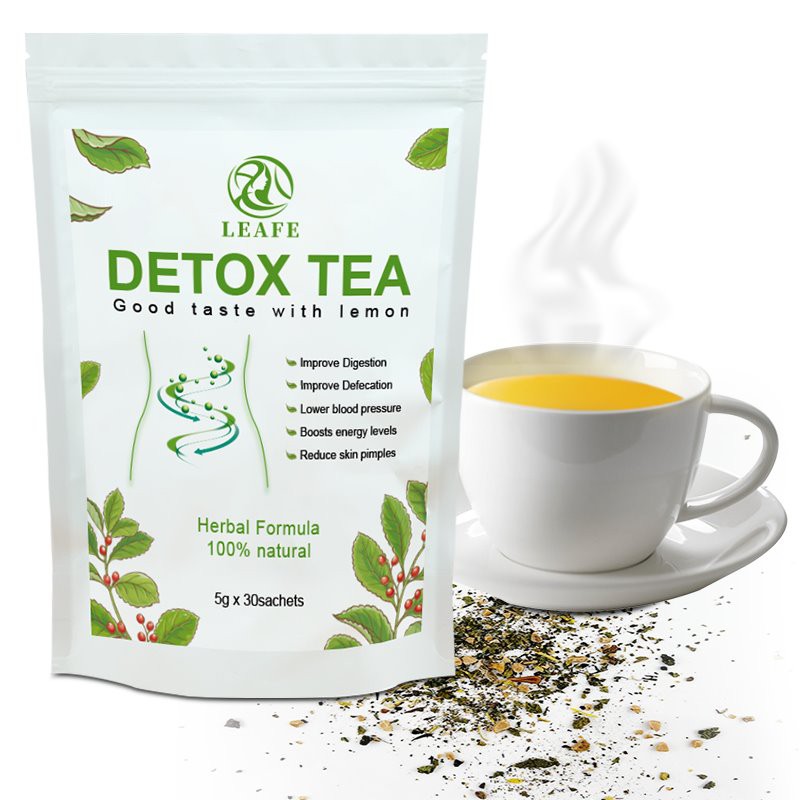
Improve Digestion Improve Defecation |
|
Size |
5g x 30sachets |
|
Logo |
LEAFE Or Your Logo |
Element of Tea
Polyphenols: In steeped teas, polyphenols are largely responsible for astringency, a taste experience that causes a drying sensation on the tongue and bitterness. The term polyphenol simply refers to a categorization of compounds composed of many phenolic groups, hence the name poly-phenol.
Amino acids: Amino acids give finished tea its sweetness and brothiness, otherwise known as umami. In the tea field, sunlight converts amino acids to polyphenols; shade-grown tea contains more amino acids than tea grown in direct sunlight.
Enzymes: Polyphenol oxidase and peroxidase are the most important enzymes in tea leaves. They are responsible for the enzymatic browning of tea leaves that takes place when the cell walls in the leaves are broken and the polyphenols are exposed to oxygen – Otherwise known as oxidation.
Pigments: Plant pigments give leaves their color and are responsible for absorbing light for photosynthesis. There are two major groups of pigments in fresh tea leaves: Chlorophylls and carotenoids. These pigments condense during withering and oxidation, causing them to become darker.
Carbohydrates: All plants store energy formed during photosynthesis in starches and sugars, otherwise known as carbohydrates. Plants later use this stored energy to fuel important reactions.
Minerals: Mineral elements have been found in tea leaves. Compared to other plants, tea contains high amounts of fluorine, manganese, arsenic, nickel, selenium, iodine, aluminum, and potassium.
Store Tea Properly
Avoiding the five 'tea killers' above means you'll have to consider the location, packaging material and packaging mechanism you're using to store your tea.
Store far away from anything with a strong odor. Store in a dark cabinet or completely opaque container. Keep delicate teas separate from strongly scented teas. Avoid storing tea in humid areas of your kitchen or house.
Bag/day after meal. Generally speaking, drinking tea on an empty stomach in the morning May have better results, but make the appropriate decision based on your needs. Cautions: Not suitable for pregnant women feeding women and children under 14 years of age.
Tea Making Process Steps
Plucking the tea leaves: This is one step that every single type of tea must start with. After all, for tea manufacturing to happen, you need to remove the leaves from the plant first! Some teas require leaves to be plucked at a younger age, while others require a mature leaf.
Letting the tea leaves wither: Like any other flower or plant, tea leaves will naturally begin to wither once they are plucked from the bush. The goal of this step is to let the moisture in the leaves evaporate.
Rolling, tossing, or crushing the tea leaves: Processing tea leaves requires breaking down some of the cell walls so that the air can react with them. This is done by shaking, tossing, crushing, and rolling the tea leaves to get them ready for oxidation.
Oxidizing the tea leaves: This is by far the most important part of the tea-making process. The level of oxidation is what determines what kind of tea is created. Once the cell walls of the leaves have been ruptured, they are left exposed to the air. The oxygen reacts with enzymes in the tea leaves and changes the chemical composition of the tea.
'Fixing' the leaves by heating - locking in the flavour/health benefits: One key step in processing tea leaves is to heat them once the desired level of oxidation is achieved. Heating stops the enzymes in the tea leaves from any more oxidation.
Drying the tea leaves: The tea leaf was 100% moisture when picked from the bush, during the above processing steps it slowly lost it's moisture content, and the goal of the drying stage is to bring that moisture all the way down to 3-7%.
Sorting the tea leaves: The final step in the tea factory process is sorting the tea leaves before they are packed. This involves the careful process of sifting through all the dried tea to remove any impurities, stems, or unrolled leaves.
|
Packing |
Box |
|
Shipping |
Shipped by road, sea, rail or air |
|
Discount |
For larger quantity, we always support with better price |
|
Payment |
Paypal, West Union, MoneyGram, T/T, L/C, Cash, etc |
|
Production lead time |
Around 7 to 15 days according to the order ·quantity and production details |
FAQ
We're professional tea suppliers in China, specialized in providing high quality customized service. Please feel free to buy or wholesale the best tea for sale here and get quotation from our factory. For price consultation, contact us.
boobs pills bigger, Weight Loss Belly Fat Burner Capsules, Vegan Vitamin C Gummy Bears